
How to Pack Up Your Home for a Move: Home Packing Techniques
Last updated: 8 September 2026 • 9 min read
"How do I pack up my home for a move?" is a question many people ask themselves the moment they decide to move. Alongside the excitement of moving into a new home, getting your belongings ready to be moved in an orderly and safe way can be stressful. We've put together a practical guide to help you move the things you've accumulated over the years in a planned way and pack up your home step by step.
How to Pack Up Your Home When Moving
Part 1: When Should You Start Packing for a Move?
The earlier you start preparing for your move, the less stress you'll experience. In general, we recommend starting to plan at least 4 to 6 weeks before your moving date. For large homes, families or people with lots of special items, this can extend to 8 weeks.
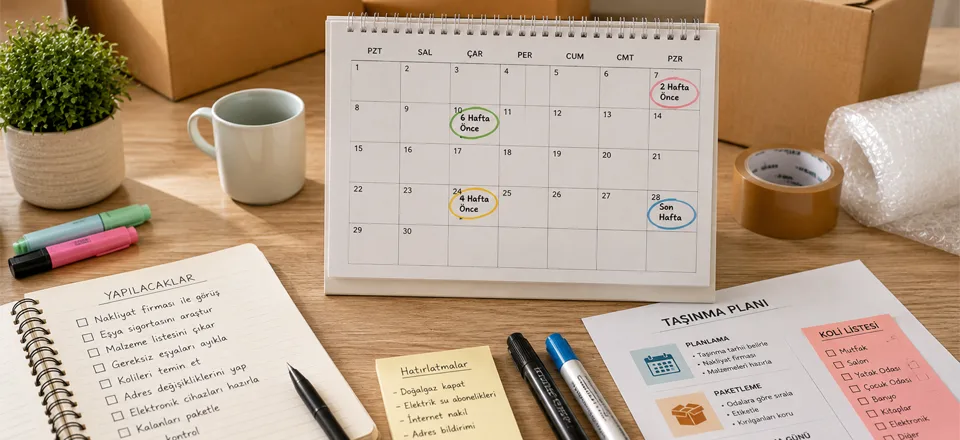
Moving and Home Packing Plan
6 weeks before the move:
- Confirm your moving date.
- Start talking to moving companies and book suitable dates.
- Look into insurance for your belongings and consider these insurance options if you see fit.
- Make a list of the supplies you'll need for the move. We've also listed the essential supplies for you later in this article.
4–5 weeks before the move:
- Get boxes, tape and packing materials.
- Start packing seasonal and rarely used items.
- Declutter. Prepare separate boxes for items you'll donate, sell and throw away.
- Start updating your subscriptions, utility bills and address records.
2-3 weeks before the move:
- Pack your bookshelves, decorative objects and home textiles.
- Start packing the items you won't need until after moving day.
1 week before the move:
- Pack your kitchenware, starting with the items you use least.
- Prepare your electronic devices.
- Label all boxes according to their contents. This will make things easier for you during the move.
On the last day:
- Pack all remaining belongings, your everyday clothes and kitchen items.
- Do a final walk-through of the home; check hidden compartments, balconies and storage areas.
If your new home isn't ready yet or you need to store your belongings somewhere temporarily during the move, consider a household storage solution.
Part 2: What Supplies Do You Need for a Move?
Don't let packing up your home for a move intimidate you. With the right supplies and a good plan, the process will be quite easy. Having the right materials before you start packing makes the job much easier. You can adapt the list below to the amount of belongings you have.
Moving Supplies Checklist
- Cardboard boxes (small, medium and large, for items of different sizes)
- Wide packing tape
- Bubble wrap (for glass and fragile items)
- Foam edge protectors / foam sheets (for furniture corners and porcelain)
- Newspaper (for wrapping glassware)
- Stretch wrap (for wrapping furniture and some other items)
- Box markers and colored labels (for labeling and categorizing boxes)
- Vacuum storage bags (save space for winter clothes and duvets)
- Wardrobe boxes (let you move your clothes without taking them off their hangers)
- Straps and tie-down ropes (for securing items in the vehicle)
You can find all these supplies at Troy Depo's online store. These products will make your move easier.
Part 3: How to Declutter Before a Move
Moving is the perfect time to weed out things that have piled up over the years and that you no longer use. Go through your belongings before you start packing. This way you'll not only get rid of unnecessary items but also have more room in your new home because you're moving fewer things.
The Keep-or-Let-Go Technique
Packing up your home gives you the chance to go through all your belongings. At this stage, evaluate each item with these questions: Have I used this in the last 6 months? Will I need it again? Is there room for it in the new home, and will I use it? Answer these questions and then decide whether to keep it or let it go.
Sort your belongings into 3 categories: items to donate, items to sell and items to throw away. If items in usable condition won't fit in your new home or you don't think you'll use them anymore, you can donate them, such as clothes, books or small appliances. You might also consider selling items that are in good shape; put them in a "to sell" box for second-hand sale. Items that can no longer be repaired or that you consider worthless go in the trash box.
Decluttering not only lowers your moving costs but also gives you a fresher, roomier start in your new home. A moving company's fee is directly tied to the volume of your belongings; every box you eliminate makes a difference.
Part 4: Room-by-Room Packing Strategy
Trying to pack the whole house at once can create chaos and stress. The most efficient approach is to finish one room completely before moving on to the next. That way, you won't mess up the areas you've already packed.
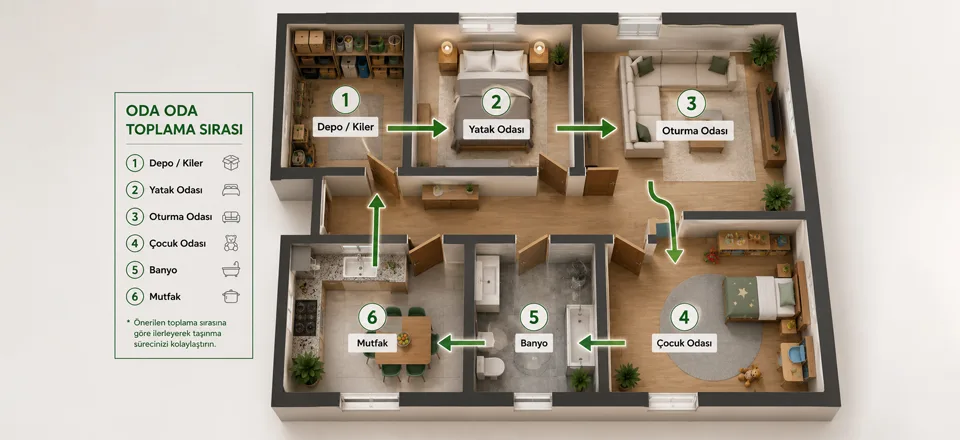
In What Order Should You Pack the Rooms?
- Storage room or pantry: As the least used space, it's the first area to pack. This is where seasonal items, spare tools and unused things are kept.
- Bedroom (seasonal clothes): Start with out-of-season clothing and pack the clothes you wear regularly last.
- Living room: Books, knick-knacks and paintings, decorative objects, game consoles and similar items.
- Kids' room: Pack toys, books and clothes separately. Getting children actively involved both speeds things up and helps them prepare emotionally for the move.
- Bathroom: Leave the products you use every day for the final week; you can pack the rest earlier.
- Kitchen: This is the last room to pack. Start with rarely used items and pack the pots, pans and dishes you use every day last.
Part 5: How to Pack Belongings by Type When Moving
How to Pack Fragile Items (Glass, Porcelain, Crystal) When Moving
Alongside "How do I pack up my home for a move?", people often ask "How should I pack fragile items?" Glasses, plates and other glassware from the kitchen are the riskiest part of any move.
First, wrap each piece individually in newspaper; never wrap more than one piece in the same sheet. Line the bottom of the box with bubble wrap or folded newspaper to create a cushion. Place items horizontally rather than upright; plates are safer standing on edge and glasses upside down. Adding a layer of bubble wrap or foam between each layer reduces the risk of breakage. Write "fragile" on the box with a marker and attach a colored label. Never put these boxes at the bottom; they should ride on top during transport.
How to Pack Kitchen Items When Moving
The kitchen is one of the most laborious parts of a move. If you prepare in the order below, moving day will be much easier for you.
- Rarely used items: Cake pans, specialty kitchen tools, spare utensils and the like.
- Glass and porcelain items: Plates, glasses, pitchers and the like. Each in a separate box, using the method described above.
- Pots and pans: These have a low risk of breakage; they can be wrapped together or nested inside one another. Put kitchen towels or newspaper between them.
- Small kitchen appliances: Put them in their original boxes if you still have them; if not, wrap them in foam protectors and bubble wrap and place them in a dedicated box. Detach and label the cables and keep them with the appliance.
- Spices, oils and bottled products: Put them in leak-proof bags, pack them in a separate box and don't place them under other items.
How to Pack Clothes and Home Textiles When Moving
Since clothes can't break, you can pack them more freely. The tips we've put together for you will make the job even easier.
- Prepare a separate box for each family member. This makes settling into the new home much easier.
- Divide clothes into two groups: summer and winter.
- Use vacuum bags for winter clothes. Puffy coats, duvets and blankets shrink to a fraction of their volume, so you save space and need fewer boxes.
- If you don't want to take your dresses and suits off their hangers, go for wardrobe boxes. On request, the Troy Depo moving team will hang your clothes in wardrobe boxes.
- Box home textiles such as bedding sets, covers and blankets separately.
How to Pack Furniture When Moving
Furniture makes up the heaviest and bulkiest part of a move.
- Disassemble any furniture that can be taken apart. Bookcases, shelves, headboards and storage beds can usually be disassembled. You can put small parts like screws in a zip-lock bag and tape it to the piece of furniture.
- Put a label on every part you disassemble or take a photo of it. This makes reassembly in the new home much easier.
- Cover corners and surfaces that could get damaged with furniture moving blankets, then secure them with stretch wrap.
- For special items such as marble tables, antique furniture or a piano, talk to your home moving company in advance. These items require extra labor and directly affect the moving price.
How to Pack Electronics When Moving
- Put your electronic devices in their original boxes, if you have them.
- If you don't have the original box, wrap each device thoroughly in bubble wrap and place foam protectors on the corners.
- Put the cables in a separate bag, keep it with the device and label it.
- Let your moving company know in advance about large-screen TVs; moving these devices requires special equipment.
- Make sure your computer is packed and your important files are backed up.
How to Pack Books and Collections
- Books are surprisingly heavy, so use several small, separate boxes. If you fill a big box with too many books, the box won't hold up and it will be hard to carry.
- You can lay books flat in the box.
- Prepare a separate file box or carton for important documents and archives.
How Should You Move Valuable and Delicate Items?
- Put important documents such as IDs, passports, title deeds, insurance policies and birth certificates in a document folder and keep it with you.
- Carry jewelry, cash and collectibles yourself in a separate bag; don't let them be loaded onto the moving truck.
- For items of great sentimental or financial value, be sure to consider the moving company's insurance options.
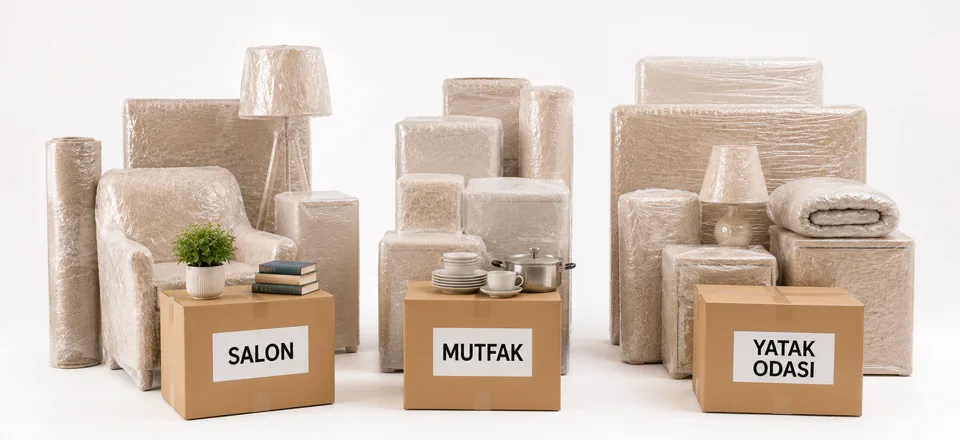
Part 6: How Should You Label Moving Boxes?
Labeling makes settling in after the move significantly easier. A well-labeled box goes straight to the right room.
You can label boxes by specific categories. You can indicate which room the items belong to, such as the kitchen, bedroom or bathroom. You can label them by contents, for example "Kitchen – fragile." You can also mark boxes as heavy or light.
Part 7: Where Can You Store Your Belongings Temporarily?
Moves sometimes run into unexpected developments: the handover of your new home may be delayed, renovations may drag on or two moving dates may overlap. In these cases, temporarily storing your belongings in a secure storage facility is the smartest solution.
Secure Household Storage with Troy Depo
Troy Depo is a professional household storage company with more than 20 storage facilities in Istanbul (European and Asian sides), Kocaeli, Ankara, Antalya, Bursa and Izmir. Whether you need temporary storage, moving services or packing supplies during your move, Troy Depo is with you every step of the way.

