
How to Prevent Moisture, Mold and Pests in Storage
Last updated: 8 August 2026 • 6 min readMost of the damage we see on belongings coming out of storage isn't breakage or scratches; it's moisture. That smell from inside a wardrobe opened after a year, the gray stain on the edge of a mattress, the dining table whose finish has turned cloudy white. It all progresses slowly, and by the time you notice, it's too late. The good news: almost all of it is preventable. And most of it comes down to a few things you do at home before anything goes into storage.
Key Takeaways
- Most storage damage comes from moisture, and it's preventable.
- Mold spores multiply rapidly at relative humidity above 60%, which is why climate control is decisive.
- Don't wrap wood, leather or fabric directly in plastic; plastic traps moisture inside.
- The number one cause of pests is food residue; no food goes into storage.
- Keeping belongings off the floor is the simplest and most effective precaution.
Why Is Moisture Such a Big Deal?
Air doesn't circulate much in an enclosed space. When the temperature drops at night, moisture in the air condenses on surfaces, just like a bottle "sweating" when you take it out of the fridge. That water seeps into the pores of wood, the fibers of fabric and the inside of cardboard. Mold spores multiply rapidly at relative humidity above 60%. In other words, the problem isn't a leak; it's the air itself.
That's why the first technical question to ask when choosing a storage facility is: is it climate-controlled? We've put the other questions you should ask in our 12-question checklist.
What Is Each Item Vulnerable To?
| Item | Risk | Precaution |
|---|---|---|
| Wooden furniture | Swelling, cracking, finish turning white | Breathable cover, raised off the floor |
| Particleboard / MDF | Absorbing water at the edges and swelling | Store on pallets |
| Mattresses and fabric | Mold, odor | Completely dry, in a breathable cover |
| Leather | Drying out, cracking, mold | Conditioning cream, away from heat sources |
| Electronics | Condensation, corrosion | Original box or bubble wrap, with a moisture absorber alongside |
| Books and documents | Yellowing, mold, insects | Sealed boxes, raised off the floor |
| Rugs | Mold, moths | Dry, rolled, with moth repellent |
There's a separate guide for items like TVs, computers and sound systems: storage for electronics.
What to Do at Home Before Storage
Six rules. None of them costs money; all of them take a little time.
- Make sure everything is completely dry. If the curtains were just washed or the rug was shampooed only yesterday, wait. Textiles packed while damp will grow mold in a closed box within a few weeks.
- Wash your kitchenware. Grease at the bottom of a pan is an open invitation to pests.
- Clean and dry the refrigerator, and leave the door ajar. The inside of a refrigerator left closed turns into a mold garden.
- Use plastic only as the outermost layer. Plastic shouldn't touch wood, leather or fabric directly.
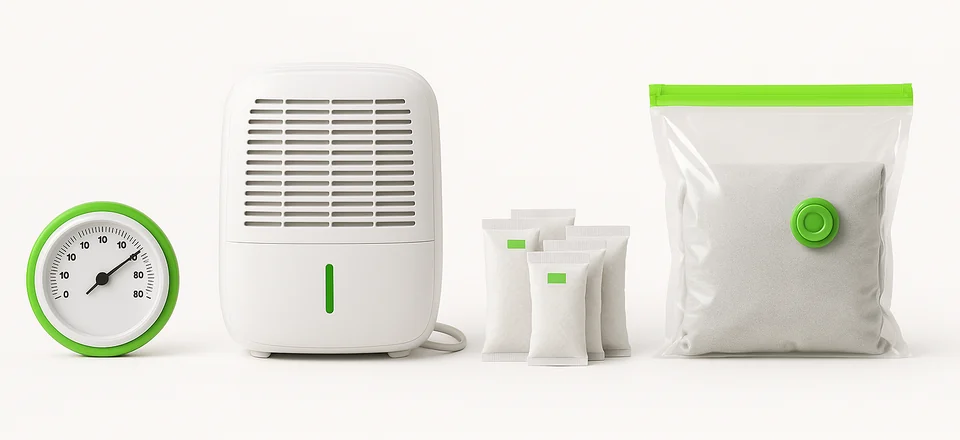
- Add moisture absorbers. Put silica gel or moisture absorbers inside sealed boxes and cabinets.
- Raise everything off the floor. Pallets or a wooden base; this is the cheapest and most effective precaution.
Where Do Pests Come From?
Almost always from the same place: organic waste. That's why no food goes into storage. It isn't a preference; it's a rule. Legumes from the pantry, a forgotten pack of cookies at the back of a kitchen cabinet: all of it stays out. Plants and soil aren't stored either; potting soil is a ready-made home for insects.
Store textiles washed, in sealed bags, with moth repellent inside. Keep cardboard boxes off the floor; cardboard is a favorite hiding place for insects. The full list of what can and can't go into storage is in our article what can be kept in storage.
If It Will Be Longer Than Six Months
Long-term storage calls for a few extra steps. If possible, schedule periodic checks or ask for them to be done; opening things up and taking a look once a year can save a lot. Find out when the moisture absorbers become saturated and how often they need replacing. Plan annual care for leather and wood; a leather sofa that goes a year without conditioning cream will crack. If you have valuable or delicate pieces, the extra precautions in our article on why storage matters for antiques apply here too.
When Choosing a Storage Facility
Climate control, pest control treatments and keeping items off the floor are part of the standards Troy Depo looks for in its partner facilities; you can find the details on our Troy Depo Standards page. To find the right storage for you, get a free quote or call 0850 888 66 15.
Frequently Asked Questions
What is the difference between a climate-controlled warehouse and a regular one?
In a climate-controlled warehouse, humidity and temperature are kept within a set range. In an ordinary enclosed space, the outside air is reflected inside: condensation in winter and excessive heat in summer can damage your belongings.
If I wrap my belongings in plastic, will they be protected from moisture?
It may be the opposite. Moisture that builds up under plastic can't escape and speeds up mold growth. Use breathable covers for wood, leather and fabric; keep plastic as the outermost layer.
What triggers pest problems in storage?
The most common cause is food residue. Unwashed kitchenware and an uncleaned refrigerator increase the risk. That's why putting food in storage is prohibited.
Do I have to dry my belongings before putting them in storage?
Yes. Textiles, rugs or mattresses that stay damp will grow mold within a few weeks in an enclosed space. Don't pack anything until you're sure it's completely dry.

