
Furniture Storage: How to Protect and Store Your Furniture
Last updated: 7 August 2026 • 6 min readSay you wrapped your walnut dining table tightly in stretch film, and when you took it out of storage months later, the finish had turned cloudy white. Nobody dropped it, nobody scratched it. It sweated under the plastic. Furniture is the most expensive and bulkiest part of a home, and when it gets damaged in storage it is also the hardest to fix. Frankly, most damage happens not on the road but in storage: poor packing and poor stacking. Below are the rules for preparing furniture for storage the right way.
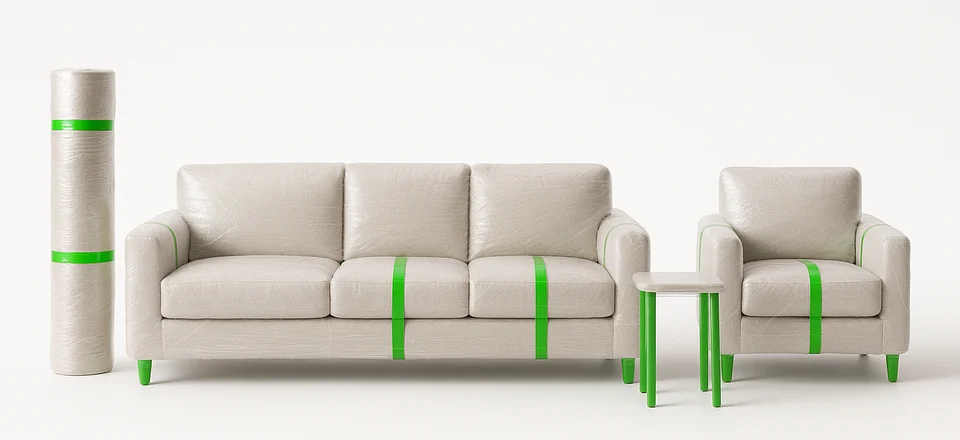
Key Takeaways
- Most furniture damage comes not from transport but from poor packing and stacking.
- Don't wrap wood or leather directly in plastic; use a breathable cover.
- Disassembling what can be taken apart both reduces volume and protects the joints.
- No furniture should touch the floor directly; particleboard and MDF are the most moisture-sensitive materials.
- Heavy items at the bottom, light items on top; drawers empty.
Three Things That Ruin Furniture
1. Moisture
Wood absorbs moisture and swells, then cracks as it dries. Foam and fabric develop mold. Metal rusts. That's why, after insurance, the first thing to ask about when storing furniture should be climate control.
2. Pressure
When pieces are piled on top of each other, the surface of the one at the bottom gives way and fabric takes on permanent marks. If the weight is poorly distributed, joints loosen. One box on a coffee table isn't the problem; three boxes are.
3. Friction
Furniture moved without covers or lined up side by side scratches each other. Most scratches happen while going into and out of storage, in that hectic half hour.
Preparing for Storage, Step by Step
- Clean and dry everything. A surface left damp in an enclosed space is where mold starts. Leather can be treated with a conditioner.
- Take apart whatever you can. Bed frames, dining tables, wardrobes, shelves. Put the screws in a small bag and tape it to the furniture; you won't have to hunt for them when you pick it up.
- Cover the surfaces. For wood and leather, use a cotton cover or a furniture blanket, something breathable.
- Protect the corners. Corners take the most impact. Use bubble wrap or corner protectors.
- Separate glass and mirrors. They are moved and stored upright, with cardboard between them.
Which materials to use where is covered in detail in our article on moving supplies.
Rules by Material
Wood
Don't wrap it directly in plastic. Wood needs to breathe; moisture trapped under plastic turns the finish white, exactly like the table in the example above. Cover it first, then add stretch film on the outside if needed.
Leather
Leather can dry out and crack. Applying a leather conditioner before storage extends its life during long-term storage. Keep it away from sunlight and heat sources.
Fabric and Foam
This group carries the highest risk of mold and odors. Make sure everything is completely dry and cover it with a breathable cover. Storing cushions upright keeps them from losing their shape.
Particleboard and MDF
The most moisture-sensitive material. It soaks up water through its edges, swells and never recovers. Keep it off the floor; it should sit on a pallet or a wooden base.
How to Stack
Heavy and sturdy at the bottom, light on top. No piece should touch the floor directly. If possible, leave sofas and armchairs in their normal sitting position rather than upright; stacking them on end deforms the foam. Keep drawers empty; full drawers slide open during the move and strain the furniture. And put anything you'll need later at the front; you don't want to pull out three armchairs to reach the coffee table at the back.
How Much Space Does It Take?
A disassembled wardrobe takes about 1.5-2 m³, a three-seater sofa 1.5-2 m³, and a dining table with chairs around 1.5 m³. For a whole home, see our guide on how many m³ of storage you need.
Which Type of Storage?
If you'll stop by from time to time, choose private room storage; if you won't touch your things for months, container storage is more affordable. For heavy, delicate or oversized pieces such as pianos, antiques or solid wood dining sets, we recommend a private room.
For valuable and antique pieces, there is also our article on why proper storage matters for antiques.
Leave the Packing and Moving to Us
Packing furniture takes the right hands as much as the right materials. Our team comes to your address, packs everything and transports it to storage. Details are in our article on storage with moving service. For a quote, reach us here or call 0850 888 66 15.
Frequently Asked Questions
Do I have to disassemble my furniture?
It isn't required, but it has two benefits: the volume drops noticeably and the load comes off the joints. We recommend disassembling beds, dining tables and wardrobes.
Can wooden furniture get damaged in storage?
It can, where there is no humidity control: it absorbs moisture and swells, then cracks as it dries. In a climate-controlled warehouse, that risk doesn't exist. Also, cover wood with a breathable cover rather than plastic.
Is it OK to wrap a sofa in plastic?
On fabric and leather sofas, plastic applied directly traps moisture and starts mold. Use a cotton cover or a furniture blanket first, then stretch film on top if needed.
Can I stack my furniture?
Yes, as long as heavy pieces are at the bottom and light pieces on top. Tabletops and glass surfaces are stored upright with protection between them.

