
How to Use Stretch Wrap
Last updated: 4 August 2026 • 4 min readEveryone buys stretch wrap, and most people wrap it around the wrong things. That clear film you pull off the roll doesn't absorb impact; its job is to hold things in place and keep dust out. If you think you're protecting something fragile with stretch wrap, it will break. If you think you're protecting polished wood with it, it gets worse: the finish turns cloudy white and never recovers.
Key Takeaways
- Stretch wrap secures items and keeps dust out; absorbing impact isn't its job.
- Never wrap it directly around wood, leather, fabric, or mattresses; these surfaces need to breathe.
- The order is always the same: the item, a breathable cover on top, bubble wrap if needed, and stretch wrap on the outside.
- 3–4 layers are enough to secure something; anything more wastes the roll and makes unwrapping a chore.
- The furniture in a two-bedroom home usually takes 2–3 rolls.
What Is Stretch Wrap Good For?
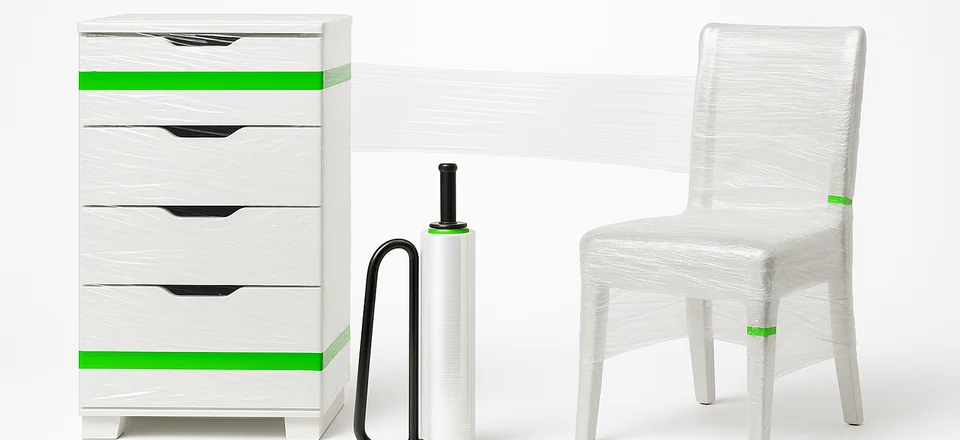
Four things. You wrap it around a nightstand so the drawers don't slide open on the road; that's securing. You run it over the cover on a sofa that will sit in storage for months so the cover doesn't collect dust; that's dust protection. You bundle the legs, screws, and cables of a disassembled table together; that's keeping things together. And once you've put a cover on a piece of furniture, you wrap over it so the cover doesn't slip; that's surface protection.
The one thing missing from this list is impact. Stretch wrap doesn't absorb shocks. For fragile items there's bubble wrap; one can't replace the other.
How to Wrap
Press the end of the roll against the item and go around once or twice; the film sticks to itself and holds. Then keep wrapping with light tension. Tension is what makes the film hold, but don't yank on it; overstretching squeezes the furniture and strains doors and panels. Overlap each pass by half so there are no gaps. If you're just securing something, 3–4 passes and you're done. If you're wrapping against dust, cover the entire surface. When you finish, press the end onto itself; no tape needed, the film already clings to itself.
Say you have a roll in hand and a nightstand with drawers in front of you. Empty the drawers first, then wrap the body. A nightstand wrapped with full drawers is heavy and puts stress on its own frame.
What Not to Wrap
| Surface | What happens | The right way |
|---|---|---|
| Wooden furniture | Moisture gets trapped underneath, the finish turns white | Breathable cover first, then stretch wrap |
| Leather sofa | It sweats and grows mold | Cotton cover, stretch wrap on the outside |
| Fabric sofa | It can't air out and starts to smell | Furniture blanket |
| Mattress | Moisture builds up | Breathable mattress cover |
| Electronics | Static and condensation | Bubble wrap, then a box |
The common thread: stretch wrap should never touch any surface that needs to breathe. Cover first, stretch wrap last.
Where It Helps on Moving Day
- Keeping nightstands and dressers with drawers closed (once the drawers are emptied, of course)
- Bundling disassembled table legs
- Cables and chargers
- Bundling anything with a long handle, like brooms, mops, and curtain rods, so they don't roll around the truck one by one
- Running one pass over box flaps for extra security
Stretch Wrap in Storage
For items that will sit for months, stretch wrap makes a good outer shell against dust. But used on its own it makes moisture problems worse; because it's airtight, it traps whatever is underneath. The order is always the same:
Item → breathable cover → (if needed) bubble wrap → stretch wrap
We covered moisture in detail in our article on moisture, mold, and pests in storage. Rules specific to furniture are in our furniture storage article.
Which Stretch Wrap?
There are two basic types on the market, and people who mix them up waste money. Hand stretch wrap is narrow (around 50 cm) and flexible; it's the kind used for moving and works well for furniture, drawers, and bundling. Machine stretch wrap is thicker and stretches less; it's made for wrapping pallets, it won't stretch when you pull it by hand, and it's frustrating to use. There are also very narrow rolls called mini stretch wrap; they're handy for gathering cables and holding small parts together.
The Most Expensive Mistake
Wrapping stretch film directly around polished wood. It's something we see often: a dining table comes back from storage, the wrap comes off, and there are white clouds in the finish. Moisture got trapped, the finish turned white, and that mark usually doesn't come out. The damage doesn't happen during the move; it develops over weeks in storage, and by the time anyone notices, it's too late.
The rule is the same: stretch wrap should never touch any surface that needs to breathe. Wood, leather, fabric, mattresses: cover first.
How Many Rolls Do You Need?
A rough estimate: for the furniture in a two-bedroom home, 2–3 standard rolls are usually enough. The more pieces you take apart, the more stretch wrap you'll use, even if it's just one pass per bundle.
Between boxes, tape, and paper, the supply list gets long; to see it all in one place, check out our article on moving supplies.
If you'd rather leave the packing to a team, you can get a free quote or call 0850 888 66 15.
Frequently Asked Questions
What is the difference between stretch wrap and bubble wrap?
Stretch wrap holds tight and secures, but it doesn't absorb impact. Bubble wrap absorbs impact, but it doesn't secure. Use bubble wrap for fragile items and stretch wrap to secure furniture.
Can I wrap stretch film directly around wooden furniture?
No. Stretch wrap is airtight; moisture trapped underneath turns the finish white and can also cause mold. Put a breathable cover on wood first, with stretch wrap as the outermost layer.
How many layers should I wrap?
3–4 layers are enough to secure an item. For dust protection, the whole surface should be covered. Anything more wastes material and is a hassle to unwrap.
Is it a good idea to secure drawers with stretch wrap?
Yes, it's the most practical way to keep drawers from opening during transport. But the drawers should be empty; furniture wrapped with full drawers puts stress on itself.

